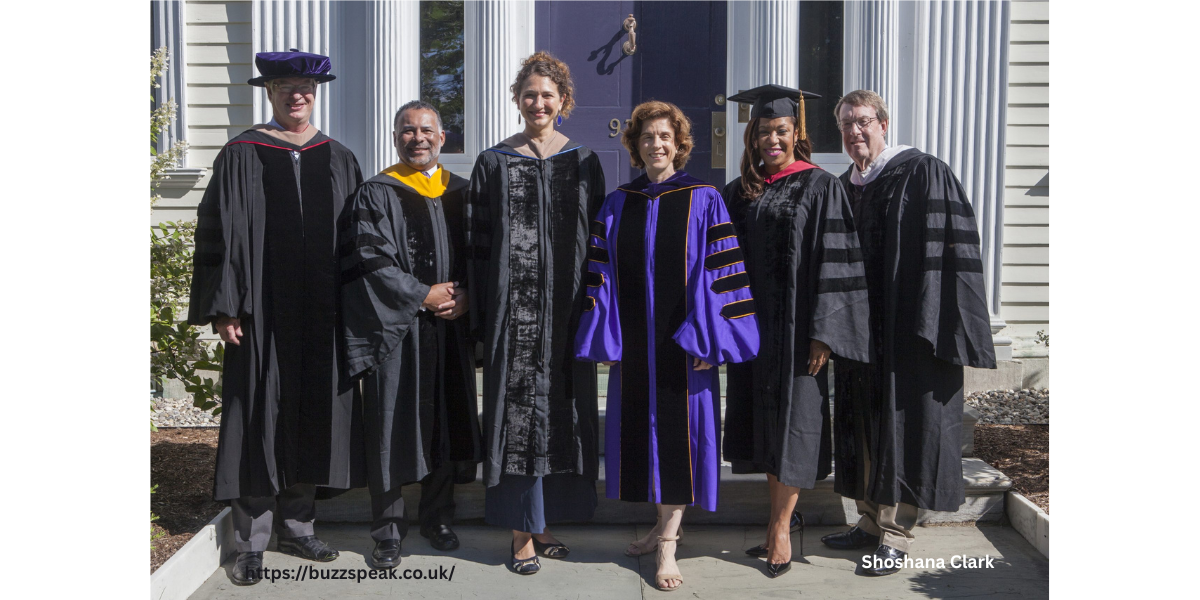

Shoshana Clark is an American nonprofit executive and international development leader best known for her role as Chief Executive Officer of Turquoise Mountain. Over the past decade, she has built a reputation for combining cultural preservation with sustainable economic development, particularly in regions affected by conflict. Her leadership has focused on restoring historic urban areas, reviving traditional crafts, and creating long-term livelihood opportunities for artisans and local communities. As interest in ethical development models grows worldwide, Clark’s work is increasingly viewed as a practical example of how heritage restoration can drive social and economic stability.
Clark’s professional identity is closely tied to Afghanistan, where Turquoise Mountain began its flagship projects. However, her influence extends beyond one country. Under her direction, the organization has expanded programs to other regions, demonstrating that preserving traditional architecture and crafts can strengthen community identity and resilience. In an era where rapid globalization often threatens cultural heritage, Clark has positioned her organization as a bridge between tradition and modern markets.
Early Life, Education, and Formative Influences
Born in August 1980 in the United States, Shoshana Clark grew up with a strong academic background and a deep interest in global cultures. Although she keeps details of her personal upbringing relatively private, it is clear that her early experiences shaped her worldview and commitment to service. She pursued higher education at Williams College, graduating in 2002. Her time at Williams College provided her with a rigorous liberal arts education and exposure to global history, politics, and social systems.
After completing her studies, Clark worked in educational and community-based roles in places such as Harlem, Boston, and Honduras. These early positions helped her develop hands-on experience in grassroots development and public service. Rather than entering the private corporate sector, she gravitated toward mission-driven organizations, building expertise in community engagement and international development strategy. These formative experiences laid the groundwork for her later leadership in cultural restoration and nonprofit management.
The Mission and Vision of Turquoise Mountain
Turquoise Mountain was originally established to revive Afghanistan’s traditional arts and restore historic neighborhoods in Kabul. The organization was co-founded in 2006 by Rory Stewart and supported by King Charles III, who was then the Prince of Wales. Its mission centered on preserving Afghanistan’s rich artistic heritage while generating employment opportunities for local artisans. When Shoshana Clark assumed leadership as CEO, she expanded and strengthened this mission with a focus on sustainability and long-term institutional resilience.
Under Clark’s guidance, Turquoise Mountain refined its model to integrate heritage restoration, vocational training, and international market access. Rather than focusing solely on physical reconstruction, the organization emphasizes capacity building. It trains artisans in calligraphy, ceramics, woodworking, jewelry making, and textiles, ensuring that traditional skills are not lost. By combining craftsmanship with entrepreneurship and global partnerships, Clark has helped transform heritage preservation into a driver of economic empowerment.
Restoration of Kabul’s Historic Murad Khani District
One of the most widely recognized achievements under Clark’s leadership is the restoration of Kabul’s historic Murad Khani district. Decades of conflict had left the area in severe disrepair. Turquoise Mountain restored more than 100 historic buildings, reconstructed essential infrastructure, and reestablished community services. This initiative went beyond architecture; it revitalized a living neighborhood, bringing economic and social activity back to the heart of the city.
The restoration project included improvements to water systems, sanitation, healthcare access, and education facilities. By integrating urban planning with cultural heritage protection, Clark and her team demonstrated that development does not have to erase the past. Instead, carefully managed restoration can create employment, attract investment, and foster community pride. The Murad Khani district now stands as a case study in how culturally informed urban regeneration can Shoshana Clarksucceed even in fragile environments.
Training Programs and Artisan Empowerment
A core pillar of Clark’s strategy has been the creation of structured training programs for Afghan artisans. Through the Institute for Afghan Art and Architecture, hundreds of students each year receive instruction in traditional crafts. These programs are not limited to technical skills; they also incorporate literacy, business management, and design development. This comprehensive approach ensures that graduates are equipped to compete in both local and international markets.
Clark has consistently emphasized market access as essential to sustainability. Turquoise Mountain works with international retailers, museums, and galleries to showcase Afghan craftsmanship. Exhibitions have appeared at institutions such as the Smithsonian Institution and the Museum of Islamic Art, bringing global recognition to Afghan artisans. By linking heritage crafts to global demand, Clark has helped create stable income streams for communities that Shoshana Clark previously had limited economic opportunities.
Leadership Style and Development Philosophy
Shoshana Clark’s leadership style is characterized by humility, collaboration, and long-term thinking. Rather than imposing external solutions, she prioritizes listening to local communities and adapting strategies to their needs. This approach aligns with contemporary best practices in international development, which emphasize participatory planning and community ownership. Clark believes that meaningful change emerges from empowering individuals within their cultural context rather than replacing local traditions with imported models.
Her philosophy reflects a deep respect for cultural dignity. She often highlights that heritage is not merely decorative or symbolic but forms the backbone of identity and resilience. In regions affected by war or displacement, preserving traditional crafts and historic spaces can provide continuity and hope. Clark’s work demonstrates that economic growth and cultural Shoshana Clark preservation are not opposing goals but mutually reinforcing forces when approached thoughtfully.
Personal Life and Partnership with Rory Stewart
Shoshana Clark is married to Rory Stewart, a British author, former Member of Parliament, and international development expert. Their partnership is rooted in shared commitments to public service and global engagement. Together, they have lived and worked in Afghanistan and other parts of the world, raising a family while balancing demanding international careers.
Despite her association with a public political figure, Clark maintains a low public profile. She rarely seeks media attention and instead allows her work to define her reputation. This discretion reinforces her credibility within the nonprofit sector, where authenticity and measurable impact are valued more than publicity. Colleagues frequently describe her as pragmatic, compassionate, and strategically focused.
Recognition, Awards, and Professional Impact
Shoshana Clark’s contributions have been recognized by academic and professional institutions. Williams College awarded her the Bicentennial Medal, honoring alumni whose leadership has had significant global impact. This recognition highlights her achievements in cultural preservation and humanitarian leadership.
Beyond formal awards, Clark’s influence is evident in the expansion of Turquoise Mountain’s programs to countries beyond Afghanistan, including Myanmar Shoshana Clark and Jordan. Her work has become a reference point in discussions about sustainable heritage management, post-conflict reconstruction, and artisan-led economic development. As policymakers and NGOs seek models that integrate cultural identity with economic resilience, Clark’s approach continues to attract attention and respect.
The Broader Legacy of Shoshana Clark
Shoshana Clark’s legacy lies in demonstrating that preserving cultural heritage can be a powerful catalyst for social transformation. In fragile states, where infrastructure may be weak and communities fractured, restoring traditional neighborhoods and crafts can rebuild both livelihoods and dignity. Clark’s work shows that development rooted in local culture is more sustainable than projects detached from community identity
readmore…claire geary: A Complete Look at the Life, Career, and Influence of a Global Marketing Leader
Conclusion: